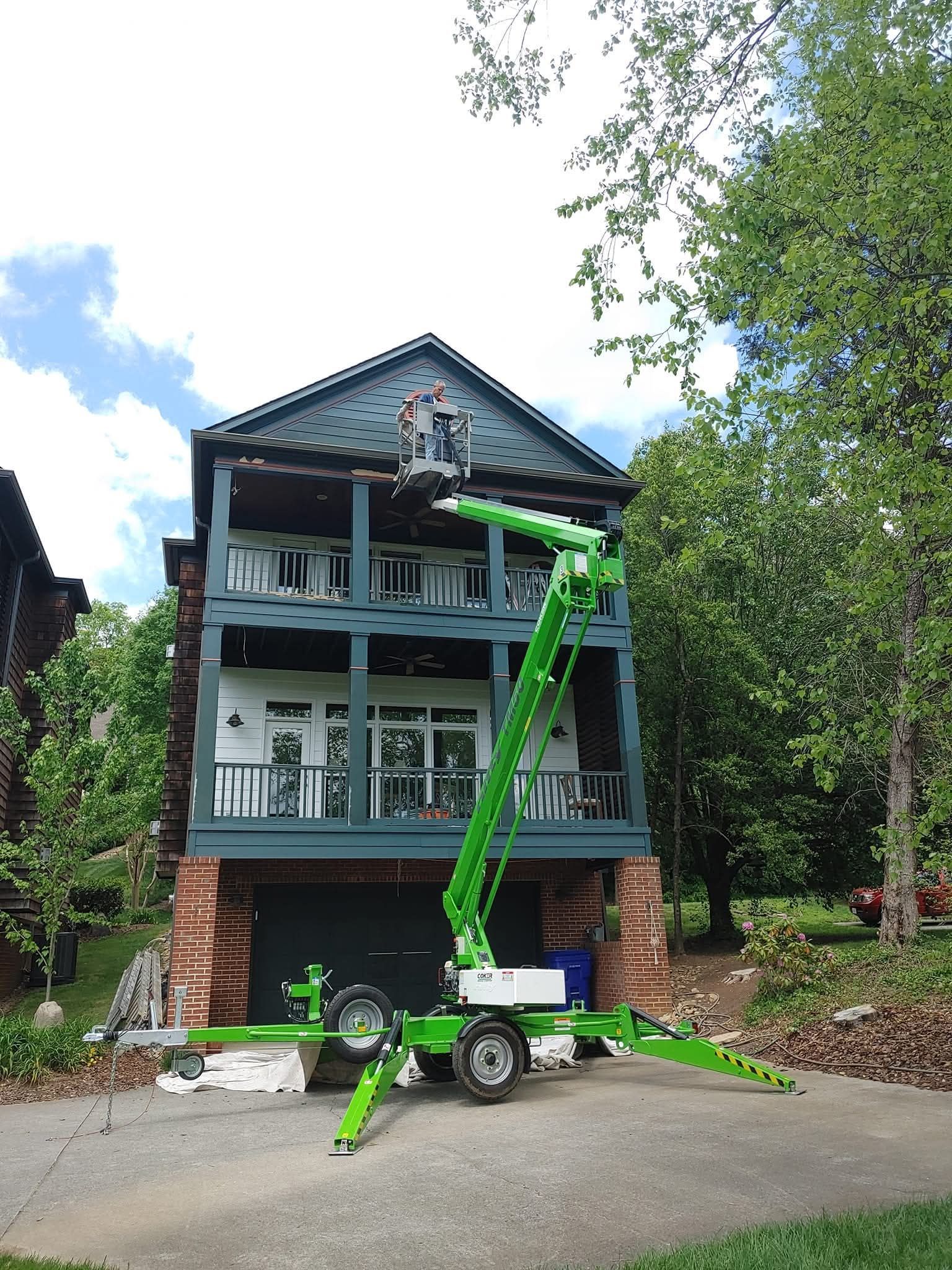

Cladding Built for Mountain Weather Exposure
Siding Installation in Powell for moisture protection and UV resistance on mountain homes
Older Knoxville neighborhoods and foothills properties experience seasonal humidity swings and prolonged sun exposure that degrade improperly installed siding within years. Moisture infiltrates behind cladding without correct barrier installation, while UV radiation fades and brittles surface finishes on south- and west-facing walls. Heritage Painting installs siding systems with engineered moisture barriers and ventilation channels that address the specific exposure conditions mountain homes face throughout the year.
The installation process begins with substrate preparation and moisture barrier application, creating a sealed plane that prevents water intrusion while allowing vapor to escape. Fastening patterns account for thermal expansion during summer heat and contraction during winter cold, preventing buckling and nail pops. Trim and flashing details seal vulnerable transitions around windows, doors, and roof junctions where water historically finds entry points.
Arrange an on-site consultation to evaluate your current siding condition and determine the barrier and ventilation approach your exposure requires.
How Siding Installation Addresses Mountain Moisture
Moisture barrier installation creates a continuous weather-resistant plane across the entire wall assembly before any cladding is attached. The barrier is overlapped and sealed at seams, then integrated with flashing around openings to form a drainage path that channels water downward and outward. Ventilation gaps behind the siding allow air movement that dries any moisture that penetrates the outer layer, preventing rot in the sheathing beneath.
After installation completes, you'll see crisp corner details and uniform reveal lines that indicate proper fastening tension and alignment. Water runs off the surface rather than staining or pooling in panel joints, and the exterior maintains consistent color without the blotchy fading that occurs when UV protection is inadequate. Interior walls stay dry even during wind-driven rain events that previously caused staining or dampness.
Color and finish matching ensures new siding integrates with existing sections during partial replacements or additions. Fastener placement follows manufacturer specifications for wind resistance, which matters in exposed foothills locations where gusts can lift improperly secured panels. The system is designed to perform across the full range of seasonal conditions properties in Knoxville and surrounding areas experience, from July heat to January freezes.
Answers to Frequent Service Questions
Siding installation raises practical questions about material selection, climate performance, and long-term durability:
What makes moisture barrier installation critical in Powell?
Seasonal humidity in the Tennessee Valley and foothills creates condensation within wall cavities when warm interior air meets cold sheathing in winter, or when humid exterior air contacts cooled interior surfaces in summer. Without a proper barrier and ventilation strategy, this moisture rots structural framing and ruins insulation before any exterior symptoms appear.
How does fastening pattern affect siding performance?
Each panel must be fastened loosely enough to move during thermal expansion but securely enough to resist wind uplift. Over-driven nails create stress points that crack panels during temperature swings, while under-driven fasteners allow wind to catch edges and tear sections loose during storms common along the I-75 corridor.
Why does UV resistance vary between siding products?
Pigment formulations and surface additives determine how long color remains stable under direct sun exposure. Lower-grade vinyl fades and becomes brittle within five to seven years on south-facing walls in Powell, while UV-stabilized products maintain appearance and flexibility beyond fifteen years in the same conditions.
When should siding replacement happen relative to window or door upgrades?
Siding is typically installed after window and door replacements are complete, allowing flashing to be integrated properly with the new frames. This sequence prevents gaps in the weather barrier and ensures trim details seal correctly at transitions between different materials.
How is ventilation maintained behind cladding?
Furring strips or built-in drainage channels create an air gap between the moisture barrier and the back surface of the siding. This gap allows water that penetrates the cladding to drain downward and air to circulate upward, drying moisture before it contacts vulnerable sheathing or framing materials.
Heritage Painting handles substrate preparation, moisture barrier integration, and fastening detail for siding installations across Knox County and Sevier County properties. Schedule a material and exposure assessment to determine the system your home's orientation and weather exposure require.