
Outdoor Structures Designed for Freeze-Thaw Cycles
Deck Construction in Powell for frost-line engineering and seasonal moisture durability
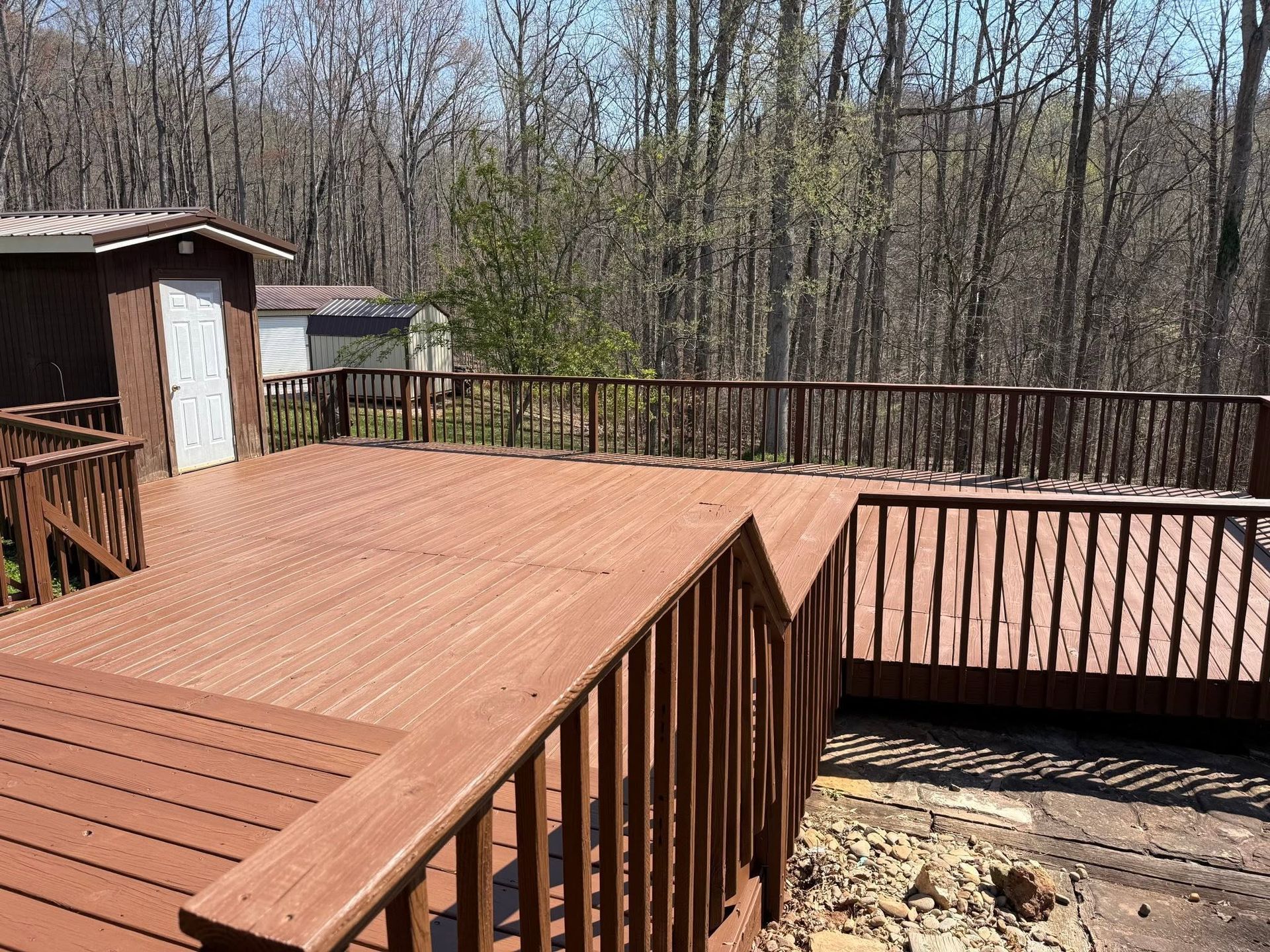
Freeze-thaw cycles in Powell, Maryville, Clinton, and surrounding areas cause deck footings to heave and structural connections to loosen when foundations are set above the frost line. Heritage Painting builds residential decks with frost-line foundation design that prevents seasonal movement, using pressure-treated or composite materials selected for their resistance to moisture absorption and dimensional stability. Footings are placed below the frost depth specific to your elevation, while expansion gaps accommodate the swelling and contraction that occurs across Tennessee Valley humidity cycles.
The construction process includes flashing installation where the deck attaches to your home, preventing water from infiltrating the wall cavity at the ledger board connection. Stair and rail systems are built to local building code specifications for riser height, tread depth, and guardrail spacing. Water management details ensure runoff drains away from the deck surface and doesn't pool on joists or beams where it accelerates rot.
Request a detailed estimate based on your lot grade, frost depth requirements, and material preferences for mountain climate durability.
What Changes After Deck Foundation Is Properly Set
Frost-line footings extend below the depth where soil freezes and expands during winter months, which in foothills terrain typically ranges from twelve to eighteen inches depending on elevation and exposure. Concrete piers are poured to this depth and allowed to cure fully before framing begins, creating a stable foundation that doesn't shift as ground moisture freezes and thaws. Joist spacing and beam sizing are calculated based on the span requirements and the load rating of your selected decking material.
Once construction is complete, the deck remains level across seasons without developing the sag or bounce that indicates settling footings. Boards maintain consistent gaps rather than pinching together or spreading apart as humidity changes, and fasteners stay tight instead of backing out from movement. Railings feel solid when tested, and stairs don't develop the creak or flex that comes from frames twisting on unstable foundations.
Pressure-treated lumber is used for structural framing even when composite decking is selected, since the framing remains hidden and requires maximum rot resistance. Composite materials eliminate the maintenance cycle of staining and sealing but cost more upfront, while pressure-treated decking offers lower initial expense with regular upkeep requirements. Both options perform in Powell and Knox County's seasonal moisture conditions when properly installed with appropriate fasteners and expansion gaps.
Common Questions About This Service
Deck construction in the Knoxville area involves foundation, material, and code considerations that affect long-term performance and safety.
Why does frost depth matter for deck footings in Powell?
Soil expands when moisture within it freezes, exerting upward pressure that lifts anything resting on or within that frozen zone. Footings placed above the frost line rise during winter and settle unevenly during thaw, causing the deck frame to twist, crack connections, and pull away from the house over repeated cycles.
How do expansion gaps prevent deck board damage?
Wood and composite materials expand across their width when they absorb moisture and contract when they dry out. Gaps of three-sixteenths to one-quarter inch between boards allow this movement without creating pressure that bows or cracks the material, while still remaining narrow enough to prevent debris accumulation or heel-catching.
What flashing details prevent water damage at the ledger board?
Metal flashing installed behind the ledger and over the top edge directs water outward away from the wall sheathing rather than allowing it to run down into the connection. Without proper flashing, water infiltrates the wall cavity, rotting both the ledger and the home's structural framing before any visible symptoms appear on interior walls.
When is composite decking worth the cost difference?
Composite materials eliminate the need for annual cleaning, staining, and sealing while resisting moisture damage and insect activity. The break-even point typically occurs within seven to ten years when maintenance labor and material costs are factored in, making composites cost-effective for homeowners planning to stay in the property long-term.
How are stair and rail codes enforced in Sevier County and Knox County?
Local building inspectors verify that riser heights remain consistent, tread depths meet minimum dimensions, and guardrail spacing prevents a four-inch sphere from passing through. Code compliance ensures safety and affects resale value, since unpermitted or non-compliant decks create liability issues and financing obstacles during property transfers.
Heritage Painting designs and builds decks with frost-line foundations and water management details specific to foothills properties. Arrange a site evaluation to review your lot conditions, code requirements, and material options for your project.