
Floors That Handle Tennessee Valley Humidity
Hardwood Flooring Installation in Powell for four-season moisture resilience and expansion control
Four-season humidity swings in the Tennessee Valley cause hardwood floors to cup in summer and gap in winter when installation doesn't account for moisture movement. Heritage Painting installs hardwood flooring with subfloor moisture assessment, material acclimation protocols, and fastening patterns engineered to survive the expansion and contraction cycles that older Knoxville neighborhoods and mountain homes experience year-round. You'll see consistent board alignment and uniform gaps that remain stable rather than opening into cracks during heating season or squeezing tight during humid months.
The process begins with measuring subfloor moisture content to confirm it falls within acceptable ranges before any material is delivered. Hardwood is then acclimated inside your home for several days, allowing it to reach equilibrium with the interior environment. Fastening and spacing follow manufacturer specifications adjusted for regional humidity patterns, preventing the stress that leads to splitting or nail pops.
Schedule a property evaluation to assess subfloor conditions and determine the acclimation period your specific climate zone requires.
Why Hardwood Installation Survives Moisture Cycles
Subfloor moisture assessment identifies problem areas where groundwater or plumbing leaks have saturated the substrate, which would cause hardwood to absorb excess moisture and buckle after installation. Moisture meters measure the wood content of both the subfloor and the hardwood itself, ensuring compatibility before fastening begins. Acclimation allows the flooring material to adjust to the humidity level inside your home rather than the warehouse or truck where it was stored.
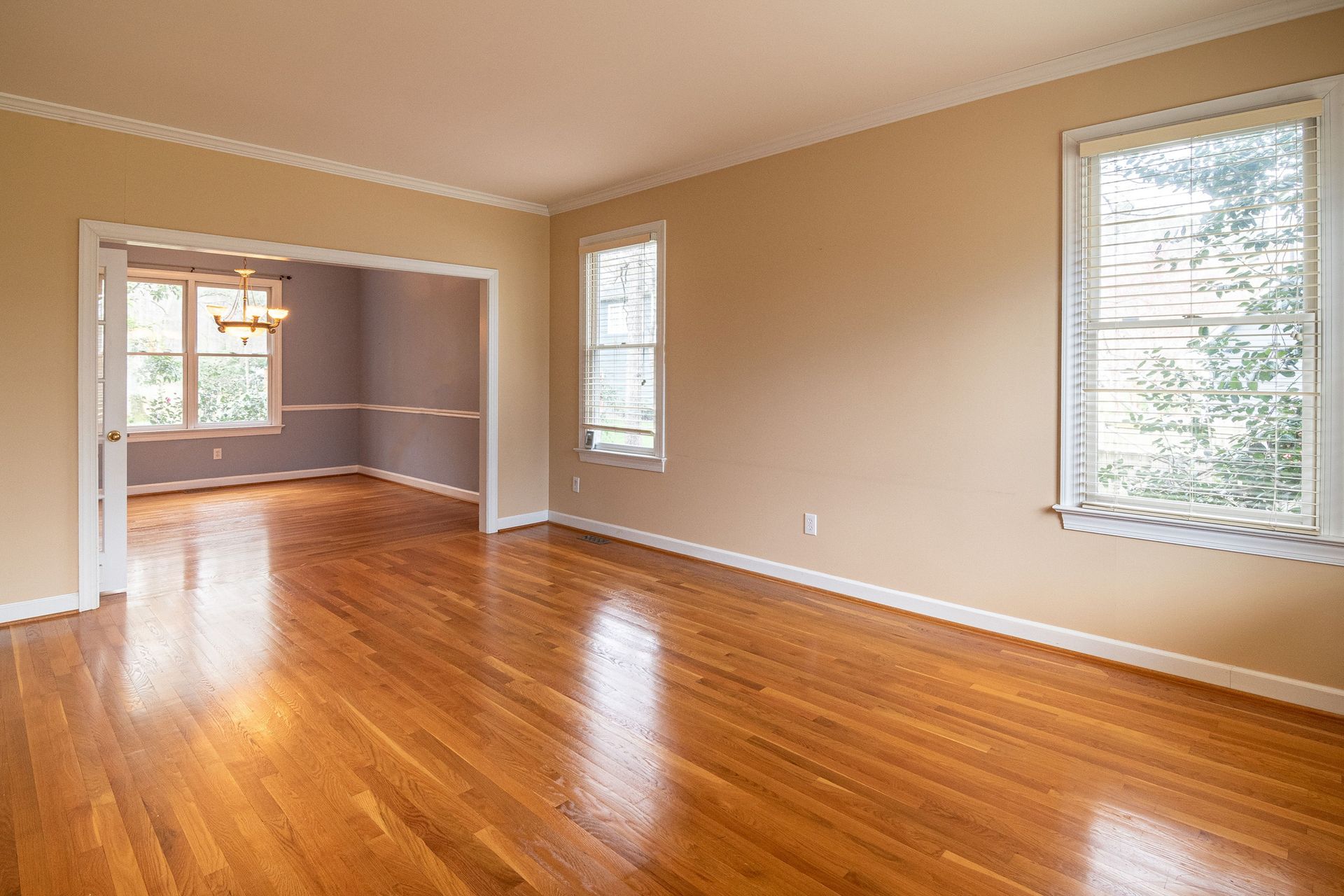
After installation completes, boards remain flat without developing the concave cupping that occurs when edges absorb more moisture than centers. Gaps between boards stay consistent through seasonal changes rather than opening wide enough to catch debris or closing so tight that boards buckle upward. The floor feels solid underfoot without the bounce or squeak that indicates loose fasteners or inadequate subfloor preparation. Heritage Painting uses fastening methods that allow controlled movement while preventing individual boards from shifting or lifting.
Finish coatings are applied after installation when site-finished floors are specified, allowing the wood to be sanded level and sealed as a continuous surface. Pre-finished products arrive with factory coatings already cured, reducing installation time but requiring careful handling to avoid edge damage. Both approaches perform well in Powell's humidity conditions when the underlying installation accounts for seasonal moisture changes that affect dimensional stability.
Questions Before Starting Your Project
Hardwood installation in humid climates raises questions about material selection, acclimation requirements, and long-term performance expectations.
What subfloor moisture levels prevent hardwood installation?
Subfloor moisture content above fourteen percent typically indicates active water infiltration or inadequate ventilation that will cause hardwood to absorb excess moisture and fail prematurely. The differential between subfloor and hardwood moisture content must stay within four percentage points to prevent dimensional mismatch after installation, which is why both are measured before work begins in Powell homes.
How does acclimation prevent cupping and gapping?
Hardwood absorbs or releases moisture until it reaches equilibrium with the surrounding air humidity. Material delivered from a climate-controlled warehouse contains different moisture content than your home's interior, so acclimation allows the boards to adjust before they're fastened, minimizing post-installation movement that creates gaps or cupping.
Why do older Knoxville homes require additional subfloor preparation?
Homes built before modern moisture barriers often lack vapor retarders beneath the subfloor, allowing groundwater humidity to migrate upward through the foundation. Additional preparation may include sealing crawlspaces, installing vapor barriers, or applying moisture-blocking primers to prevent chronic humidity exposure that no acclimation protocol can compensate for.
When should hardwood be installed relative to HVAC operation?
Installation happens after HVAC systems are operational and the home has reached normal occupancy humidity levels. Installing hardwood while construction humidity is still elevated or before climate control is active leads to excessive post-installation shrinkage once heating or cooling begins regular operation.
How do fastening patterns accommodate wood movement?
Fasteners are driven at specific angles through the tongue of each board, allowing the wood to expand and contract across its width while remaining secured lengthwise. Spacing between boards and expansion gaps at walls provide room for seasonal movement without creating pressure that buckles the floor or pulls fasteners loose.
Heritage Painting handles moisture assessment, acclimation, and climate-appropriate fastening for hardwood flooring installations across Knox County properties. Request a subfloor evaluation to confirm your home is ready for hardwood installation and review material options suited to local humidity conditions.